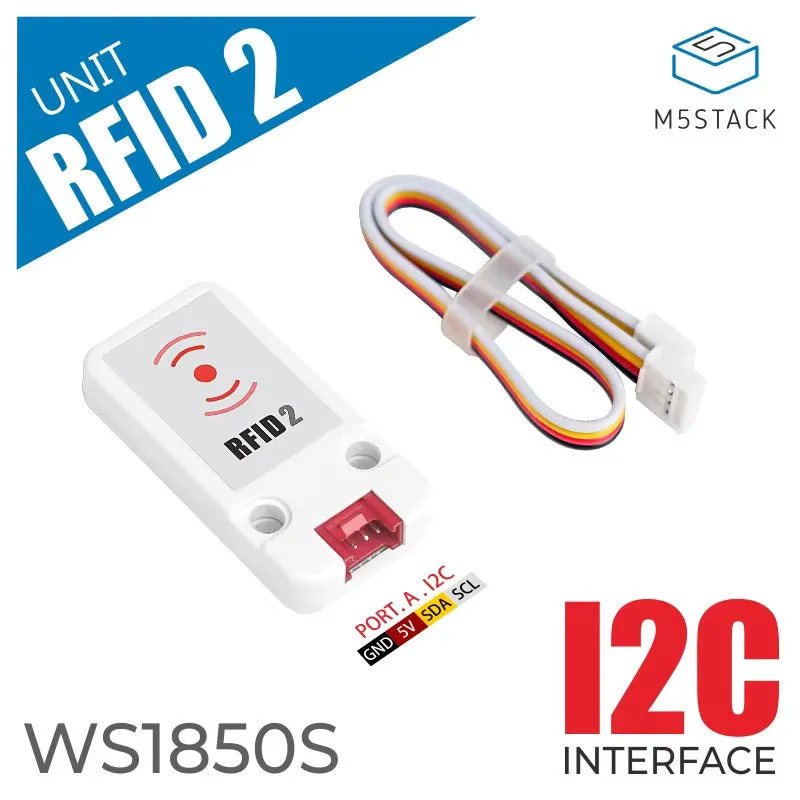
M5Stack RFID 13.56MHz Reader Writer Sensor Module for Arduino and UIFlow with 64 Byte Buffer, 20mm Reading Distance, and I2C Interface, Model WS1850S


M5Stack RFID 13.56MHz Reader Writer Sensor Module for Arduino and UIFlow with 64 Byte Buffer, 20mm Reading Distance, and I2C Interface, Model WS1850S
M5Stack WS1850S 13.56MHz RFID Reader Writer Module for Arduino and IoT Projects

Integrating RFID functionality into electronics projects is streamlined with the M5Stack WS1850S sensor module. This compact unit operates at the 13.56MHz frequency, a standard for contactless identification systems, and is designed specifically for developers and makers working with Internet of Things applications. It comes ready to connect to popular platforms like Arduino and M5Stack's own UIFlow environment, supporting both Blockly and Python programming. With a defined reading distance of under 20mm and support for common protocols like ISO14443A, MIFARE, and NTAG, it provides a practical foundation for access control, inventory tracking, or interactive object projects without requiring extensive RF design knowledge.
Features and Construction

Built around core specifications that define its capabilities, the module's construction focuses on reliable performance and ease of integration for prototyping.
Material and Build
The module is built on a standard printed circuit board (PCB) housing the RFID transceiver chip and supporting circuitry. Key to its performance is the 64-byte integrated transceiver buffer, which handles the data exchange during read/write operations. The unit is designed for low-power operation, with a specified sleep power consumption of 1 microampere (1uA), making it suitable for battery-powered IoT nodes. Its construction supports an operating temperature range from -20 degrees Celsius to 85 degrees Celsius, covering typical indoor and many controlled-environment applications.
Size and Practical Fit
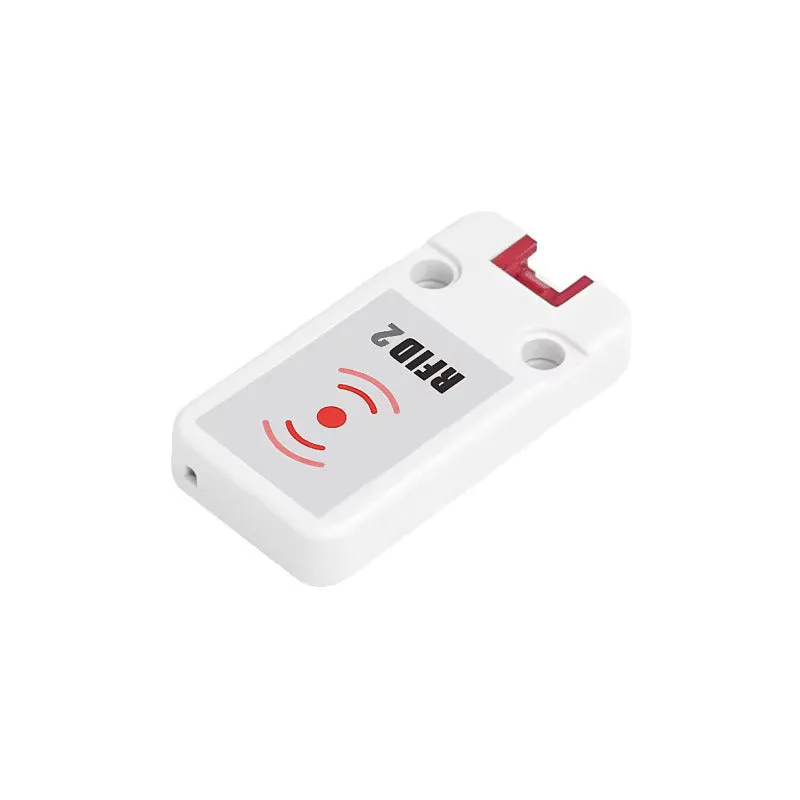
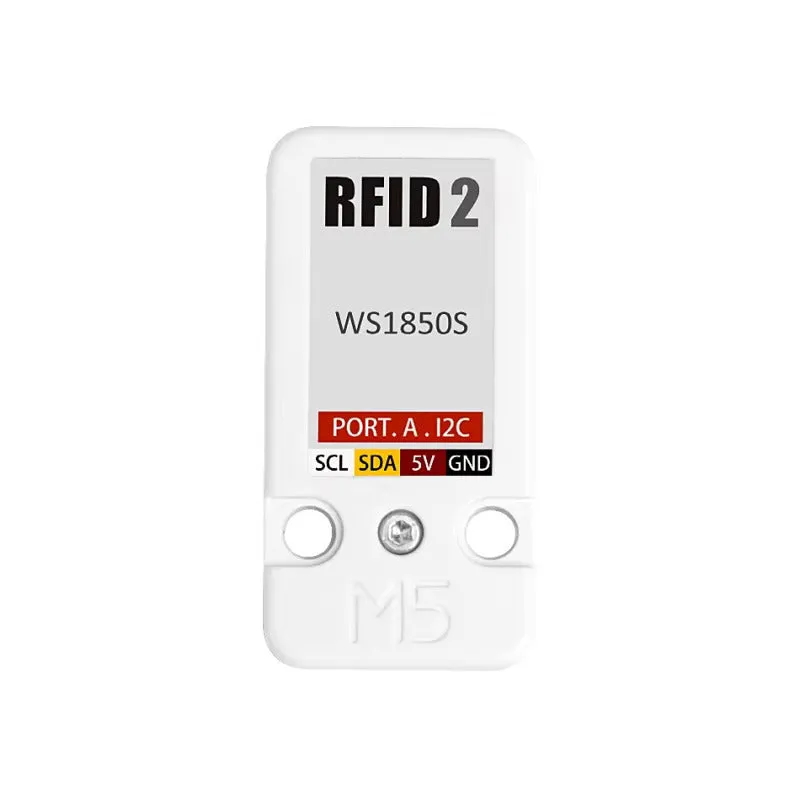
With compact dimensions of 7 centimetres by 2 centimetres, the module takes up minimal space on a project breadboard or within an enclosure. For mechanical integration, it includes 2x Lego-compatible mounting holes, allowing it to be easily attached to Lego Technic beams or 3D-printed frames that use the same spacing, a thoughtful feature for rapid physical prototyping. The primary connection is via the included 4-pin HY2.0 cable, providing a secure link for power, ground, and the I2C data lines to a host controller like an M5Stack core unit or compatible Arduino board.
Uses and Placement
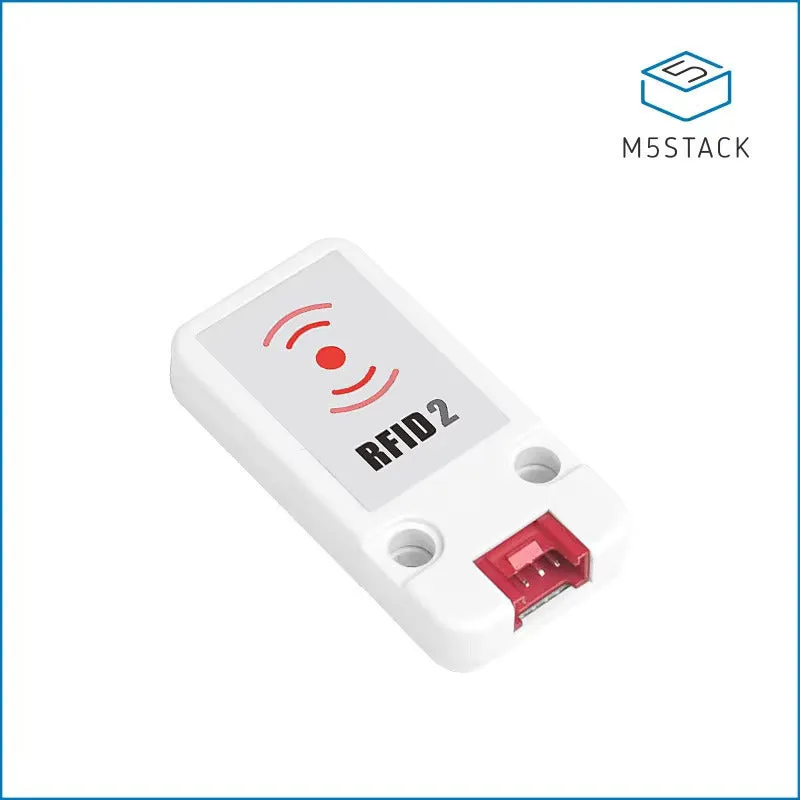
The module's specifications direct its ideal applications, from educational setups to functional prototypes in professional environments.
Event or Professional Use
In professional or event settings, this module can serve as the core of simple RFID-based systems. Its support for the ISO14443A protocol makes it compatible with a wide range of common RFID cards and tags. Potential applications include basic attendee check-in stations at conferences, inventory management for tracking small tools or kits, or interactive exhibits where touching a tag triggers a digital response. The data storage longevity of over ten years for tags, as supported by the module, ensures that information remains accessible for the medium to long term in such systems.
Everyday Home Use
For makers and hobbyists, the module enables a variety of home automation and personal projects. It could be used to create a personalised smart lock for a cabinet or room door, build an interactive toy that responds to specific objects, or develop a system for cataloguing a collection of books or media. The compatibility with Arduino and the visual UIFlow (Blockly) environment lowers the barrier to entry, allowing those with beginner to intermediate coding skills to implement their ideas. The 20mm reading distance is suitable for applications where the tag is presented deliberately to a reader, such as a tap-to-open mechanism.
Benefits and Buying Value

The value of this module lies in its specificity and integration-ready design, reducing development time for RFID-enabled projects.
Reuse and Low Maintenance
The module is designed as a reusable component. Its robust operating temperature range and standard I2C digital interface mean it can be moved between different projects and host controllers without modification. The low sleep current contributes to longer battery life in portable applications. Maintenance is minimal, primarily involving ensuring firmware is up to date for the chosen development platform. The provided HY2.0 cable offers a reliable, detachable connection, reducing wear on the module's pins compared to direct soldering.
Why Choose This Product
This module is a practical choice because it consolidates necessary RFID hardware into a single, tested unit with clear specifications. Unlike building a reader from discrete components, it provides guaranteed interoperability with stated protocols (ISO14443A, MIFARE, NTAG) and defined performance limits like the 20mm reading distance and 3400 kbit/s I2C speed. The inclusion of Lego-compatible holes is a distinct practical advantage for physical prototyping not commonly found on generic electronic modules. For developers using the M5Stack ecosystem, its native compatibility with UIFlow and M5Core devices offers a significantly faster development path.