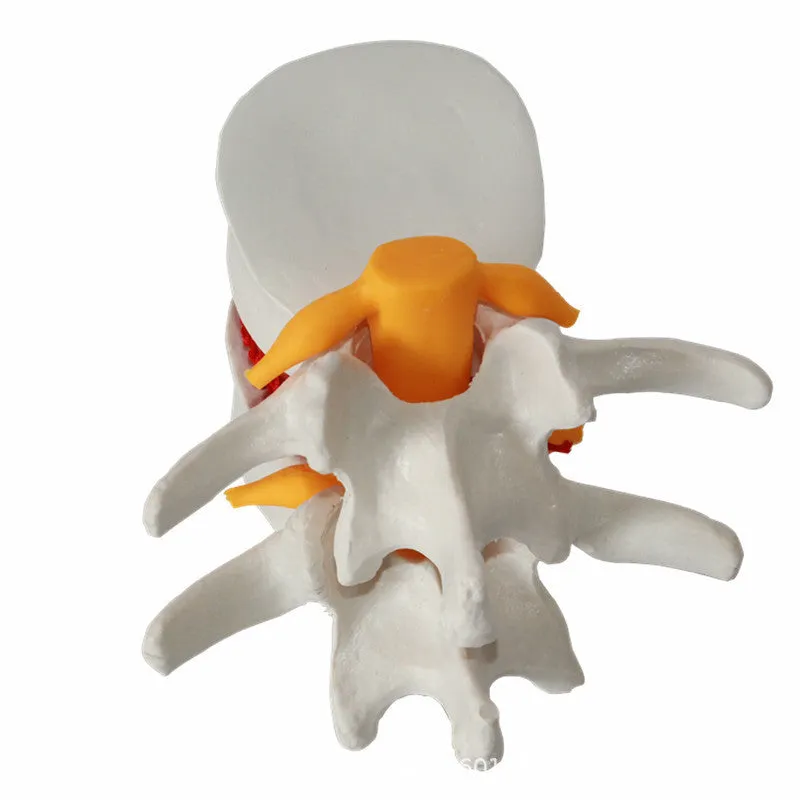
Medical education lumbar intervertebral disc demonstration model, a PVC anatomical teaching aid for spine herniation, measuring 11 x 10 x 7.6 cm, used for student training and patient consultation, in a white colour.


Medical education lumbar intervertebral disc demonstration model, a PVC anatomical teaching aid for spine herniation, measuring 11 x 10 x 7.6 cm, used for student training and patient consultation, in a white colour.
PVC Lumbar Intervertebral Disc Herniation Model for Medical Training and Patient Education

This detailed anatomical model provides a tangible, three-dimensional representation of a herniated lumbar intervertebral disc, a common spinal condition. Designed specifically for educational clarity, it serves as an essential tool in medical, physiotherapy, and chiropractic training programmes. By offering a physical object to examine, it bridges the gap between textbook diagrams and real human anatomy, enhancing comprehension for students and providing a visual aid for healthcare professionals to use during patient consultations. Its focused design on a single pathology makes it a specialised resource for explaining disc protrusion, nerve root impingement, and related back pain mechanisms.
Features and Construction
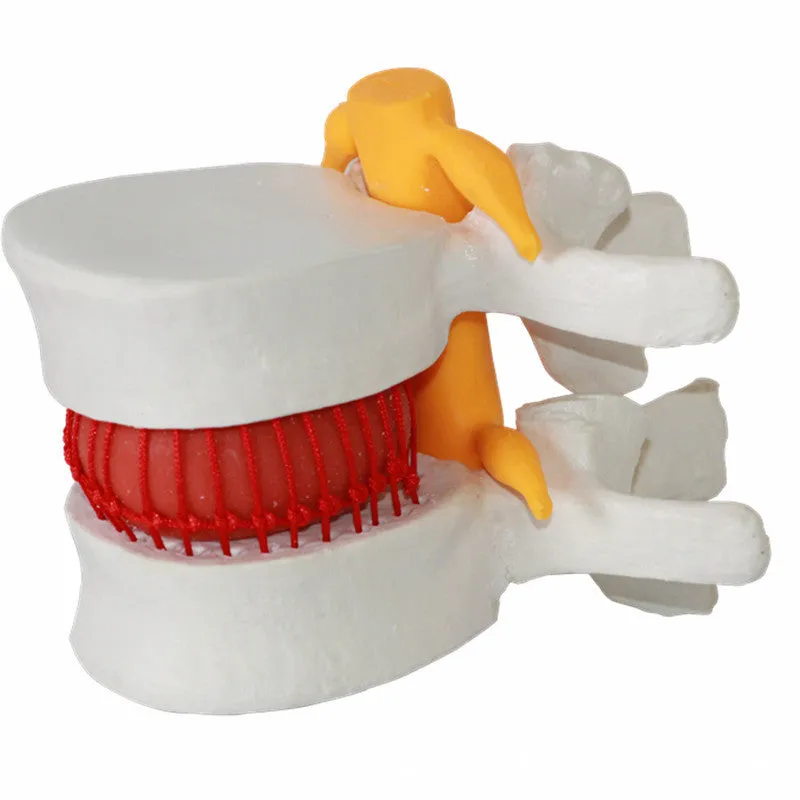
This model is engineered purely for demonstration purposes, isolating the structure of a lumbar intervertebral disc in a herniated state. Its construction prioritises clarity and durability for repeated use in active learning environments.
Material and Build
The model is fabricated from PVC (Polyvinyl Chloride), a material selected for its ability to hold detailed sculptural form and withstand frequent handling. This plastic construction ensures the model retains its shape and anatomical accuracy over time, resisting the wear that can occur with classroom or clinic use. The white colouration provides a neutral, clean backdrop that allows all structural details of the disc, its annulus fibrosus, and the protruding nucleus pulposus to be clearly visible, without distracting colouration that might obscure the educational focus.
Size and Practical Fit
With compact dimensions of 11 cm by 10 cm by 7.6 cm, the model is designed for easy manipulation and display. Its size makes it suitable for use on a desk, examination room table, or lecture podium, allowing both the instructor and learners to view it closely. The lightweight nature, at 0.22 kg, means it can be easily passed around a room or transported between different teaching locations without being cumbersome. The packaging, measuring 11.5 x 11 x 8 cm, provides a secure storage solution that protects the model when not in active use.
Uses and Placement

This model has distinct applications in both formal educational settings and clinical practice, providing value through its specific illustrative function.
Event or Professional Use
In professional environments, the model is an effective tool for patient education. A physiotherapist or spinal consultant can use it to visually explain the diagnosis of a disc herniation, the source of a patient's sciatica, or the rationale behind a proposed treatment plan. This tangible aid can demystify complex medical terminology, leading to better patient understanding and engagement with their care. It is equally useful at medical conferences or continuous professional development workshops as a hands-on reference point during discussions on spinal pathologies.
Everyday Home Use
While primarily a professional and educational tool, the model also serves dedicated students in home study. Medical or physiotherapy students can use it for self-directed revision, gaining a spatial understanding of disc anatomy that flat images cannot provide. It acts as a permanent, physical study aid that complements textbooks and online resources, reinforcing knowledge through tactile and visual learning. For anatomy enthusiasts or artists studying human form, it offers a detailed reference of a specific spinal structure.
Benefits and Buying Value

The value of this model lies in its focused educational utility, durability, and the practical clarity it brings to understanding a specific medical condition.
Reuse and Low Maintenance
The PVC construction is inherently low-maintenance. The model does not require specialised cleaning, battery power, or software updates. It can be used repeatedly across countless teaching sessions or patient consultations without degradation of its primary function—visual demonstration. This reusability makes it a cost-effective, long-term investment for educational institutions, clinics, or individual educators compared to consumable teaching materials.
Why Choose This Product
This model stands out for its singular focus on lumbar intervertebral disc herniation. Unlike generic spine models, it allows for an in-depth exploration of one specific condition. Its compact size and weight make it highly portable and convenient, while the clear white PVC presentation ensures all anatomical details are immediately apparent. For anyone requiring a dedicated, physical tool to teach or explain this common spinal issue, this model provides a straightforward, reliable, and effective solution grounded in practical educational needs.